AUSTRALIAN FAUNA Equitation Horses –
First Edition pp. xv, 92 illusts #090326 (Gift inscription on fep.)
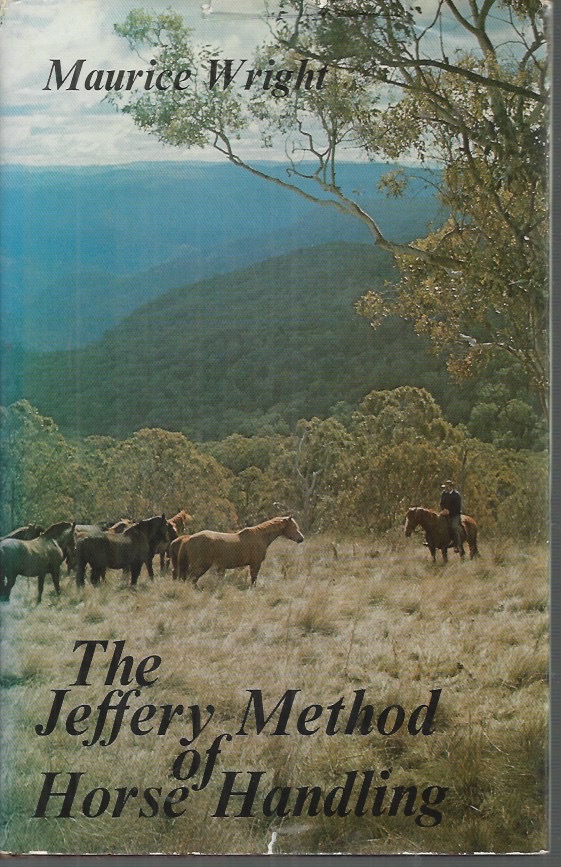
The Jeffery Method, introduced by Kel B. Jeffery and detailed by Maurice Wright, is a gentle, low-stress approach to breaking and training horses that emphasizes understanding over force. It focuses on desensitization, safety through controlled, gradual exposure, and techniques like the “control pull” to immediately gain a horse’s attention.
Key Aspects of the Jeffery Method:
- The “Control Pull” (Magic Lunge): Instead of traditional lunging, this technique uses a rope to immediately redirect a horse’s attention by applying brief, 45-90 degree pressure to the neck/windpipe, causing the horse to turn and face the handler.
- Safety First Approach: The method teaches handlers to prepare horses for riding by having them get used to the sensation of a person sliding off their back, which is safer if the horse bolts.
- Stress Reduction: It avoids traditional high-stress training methods, allowing for breaking young or difficult horses without causing trauma.
- Key Techniques:
- Desensitization: Introducing the horse to unfamiliar sensations (like a human’s weight or equipment) gradually.
- No Saddle Initial Ride: Often involves riding without a saddle to start, removing the pressure of a cinch around the belly.
Background and Resources:Origins: Developed by Australian horseman Kel B. Jeffery.
- Documentation: Maurice Wright documented the method in the book The Jeffery Method of Horse Handling: An Introduction to a New Approach to the Handling of Horses, which includes photographic demonstrations.
- Focus: It is designed to be easily learned and applied by, for example, those in Pony Clubs.