RAILWAYS –
-
- 64p. : ill., map ; 22cm. #260926
-
-
- Tasmania. Port Arthur, to 1971
- Transport. Railways. Tasmania. Tasman Peninsula, 1834-1971
- Railroads — Tasman Peninsula, Tasmania — History
- Port Arthur (Tas.) — History
-
The Port Arthur Convict Tramway, constructed in 1836 across the Tasman Peninsula in Tasmania (then Van Diemen’s Land), holds the unique historical title of being Australia’s first passenger railway.Supervised by the penal settlement’s commandant, Captain Charles O’Hara Booth, this primitive rail system was designed to bypass the notoriously hazardous, stormy sea voyage around Cape Raoul and Eaglehawk Neck when transporting people and goods from Hobart Town to the Port Arthur Historic Site.Key Facts About the Convict Tramway
- The Route: The line ran for approximately 7 to 8 kilometres between the pier at Norfolk Bay (now Taranna) and the head of Long Bay (now Oakwood). From Long Bay, passengers and cargo were rowed the remaining short distance to the main Port Arthur settlement.
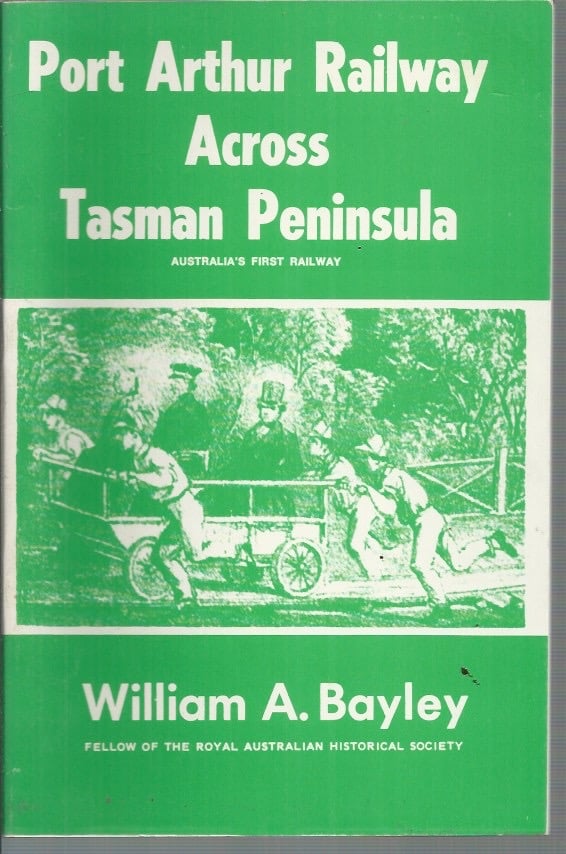
- The Power Source: Long before steam locomotives arrived in Australia, this tramway relied entirely on human horsepower. It was operated by teams of up to 40–50 convicts worked in relays. Typically, four convicts—often still wearing heavy leg irons and chains—were assigned to each crude four-wheeled wooden cart to push and pull passengers and up to half a ton of freight.
- The Track: The infrastructure consisted of rough-hewn timber rails and sleepers laid directly over the natural, unlevelled contours of the bush.
- The Ride Experience: The journey was far from comfortable. When the track went uphill, the work was brutal for the convicts. On downhill stretches, the unbraked wagons would reach alarming speeds, allowing the pushing convicts to jump onto the back of the carts and ride them down.
- Sabotage: Historical accounts from travelers, including British military officer Colonel Godfrey Mundy, noted that derailments were common. It was widely suspected that convicts deliberately sabotaged the tracks or crashed the carts to pocket the belongings of the dazed passengers.
The tramway operated for over two decades before closing in 1858. Today, while the wooden tracks have long since rotted away, the history of the line remains a prominent part of the region’s heritage. Visitors exploring the Tasman Peninsula can view remnants and historical exhibits linked to the tramway at sites in Taranna, including the original historic Norfolk Bay Convict Station building. The history of this fascinating engineering feat was famously detailed in historian William A. Bayley’s 1971 booklet, Port Arthur Railway Across Tasman Peninsula: Australia’s First Railway.
-