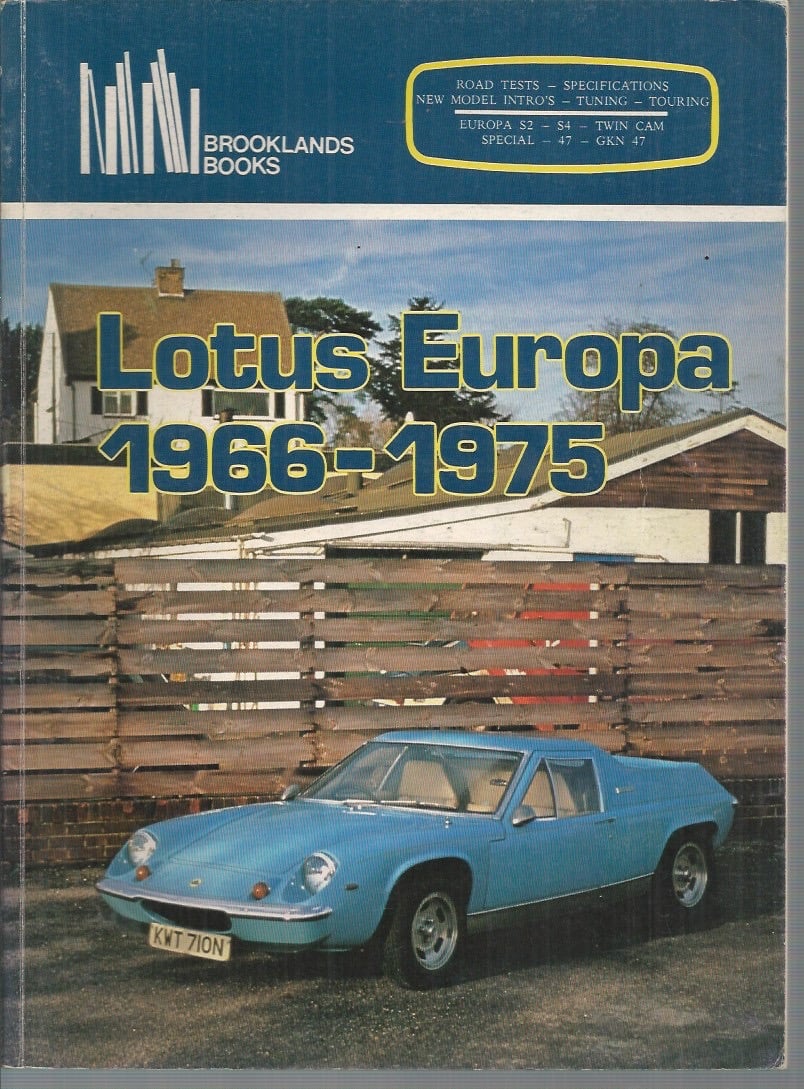
CARS –
This 100-page softcover publication is a classic documentation reference popular among automotive enthusiasts. It aggregates contemporary road tests, technical data, and driving impressions for the classic British sports car.
The Lotus Europa (1966–1975) was a groundbreaking, ultra-lightweight mid-engine sports coupe produced by British automobile manufacturer Lotus Cars. Renowned for embodying founder Colin Chapman’s core philosophy to “simplify, then add lightness,” it stands as one of the world’s first mass-produced mid-engine road cars, delivering racetrack-level balance and handling to public roads.
Model Evolution & Specifications
Over its 9-year production run, roughly 9,230 units were built across four distinct major variants. The car evolved from a stark, bare-bones export model into a highly refined, high-performance miniature supercar.
- Chassis & Body: Utilised a minimalist, folded-and-welded steel backbone chassis cloaked in a sleek, aerodynamic fiberglass shell. [1, 2]
- Powertrain Layout: To achieve a mid-engine layout on a budget, Lotus took a front-wheel-drive Renault 16 engine and transaxle unit, rotated it 180 degrees, and placed it behind the driver. [1, 2]
- Suspension: Featured a race-derived setup consisting of front wishbones with coilover dampers and Chapman struts at the rear. [1]
- Weight Efficiency: The early Series 1 tipped the scales at a mere 610–612 kg, allowing it to achieve exceptional agility and brisk acceleration despite its modest initial horsepower.
- pp. 100 illusts #230926