HISTORY South Africa –
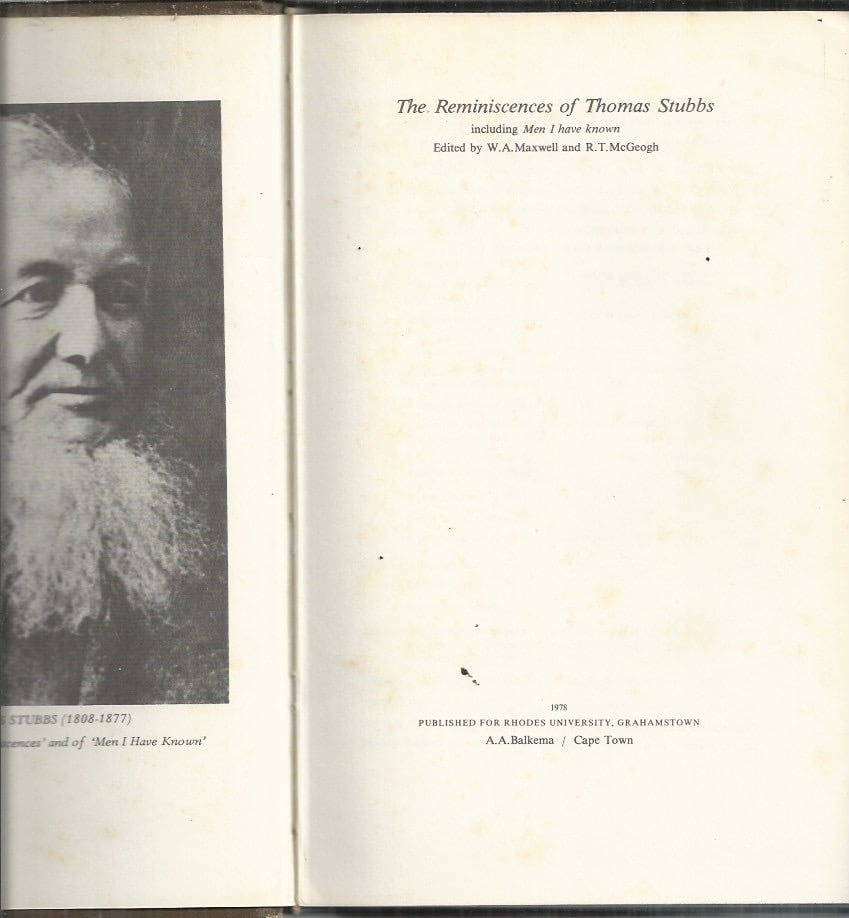
Edited by W.A. Maxwell and R.T. McGeogh, the manuscript was published posthumously in 1978 by A.A. Balkema for Rhodes University as part of the Graham’s Town Series. It serves as a vital first-hand account of early 19th-century colonial expansion, fluid border politics, and conflict in the Eastern Cape. [1, 2, 3]
Core Themes & Historical Content
- The 1820 Settler Experience: The book begins with Stubbs’ childhood memory of embarking from London on the settler ship Northampton. It details his early pioneering years as a saddler’s apprentice and his varied, often difficult, career as a businessman and mail contractor in Grahamstown (including a bankruptcy declaration in 1858).
- Frontier Warfare & Leadership: Stubbs achieved historical prominence as a military and civic leader during the Seventh and Eighth Frontier Wars (also known as the Xhosa Wars or Albany Wars of 1846 and 1850). He founded Stubbs’ Sporting Club, which evolved into the Albany Rangers (Mounted Rangers). As their Field Commander from 1850 to 1853, he led civilian volunteers defending the rural settlements around Grahamstown.
- Life in the Fish River Bush: The narrative offers deep insight into early encounters, trade, and tension with the Xhosa people. His father, John Stubbs, engaged in trading beads and buttons for Xhosa ivory and cattle before being killed, forcing Thomas to learn the “secrets of life in the Fish River bush” at a young age.
Historians consider Stubbs an engaging storyteller, though his writing is episodic and functions partly as an apologia pro vita sua (a defense of his own life and choices). Late in life, he spent 14 years petitioning the colonial government for financial compensation for health damages suffered during his military service. [1, 2]
While providing a gritty, unvarnished look at frontier life—including drunken pranks on guard duty and clashes with British military elites—the text also reflects the casual brutalities of the era. Modern reviews note that Stubbs glosses over or omits darker actions committed by his contemporaries, such as his brother-in-law’s involvement in the mutilation of Xhosa King Hintsa.